Those familiar words from a song in the play and movie “The Sound of Music” keep coming to mind. After thirty-nine of the last forty-two years of living in Winfield we have sold our current home and relocating in Wichita. Along with my farewell thoughts are the probability this may well be my last column. So, I have several thanks to hand out.
I would be remiss to not thanks Dave Seaton for the opportunity to develop and write my column for these ten years. The Courier staff has been cooperative throughout the years and prompt in getting the columns in print. I have enjoyed the chance to share insights shared with me and developed over the last fifty years.
K.B. Murray and Jeff McCaskill are the next to be thanked. They have pastored Millington Street Baptist church during these years and have been the human instruments for much of the spiritual growth we have enjoyed. Their leadership and the church fellowship will be missed in this time of transition.
Southwestern College has been an important part of our lives for over forty years. Sharon worked in various position, retiring as Assistant to the President and Provost, for over twenty- five years. I completed my Bachelor’s Degrees and later taught in Professional Studies, Campus, and the Campus Fifth Year MBA also for twenty-five years. We are both thankful for the friendships and memories of our time at SC.
I also want to personally thank Wayne Wilt for inviting me to join Winfield Optimist Club and the Winfield Jaycees. I learned a great deal about leadership and extended my leadership role when selected President of the Jaycees. Their Personal Dynamics, Leadership Dynamics, and Communications Dynamics course helped me and many others improve skills and move into leadership in many other organizations.
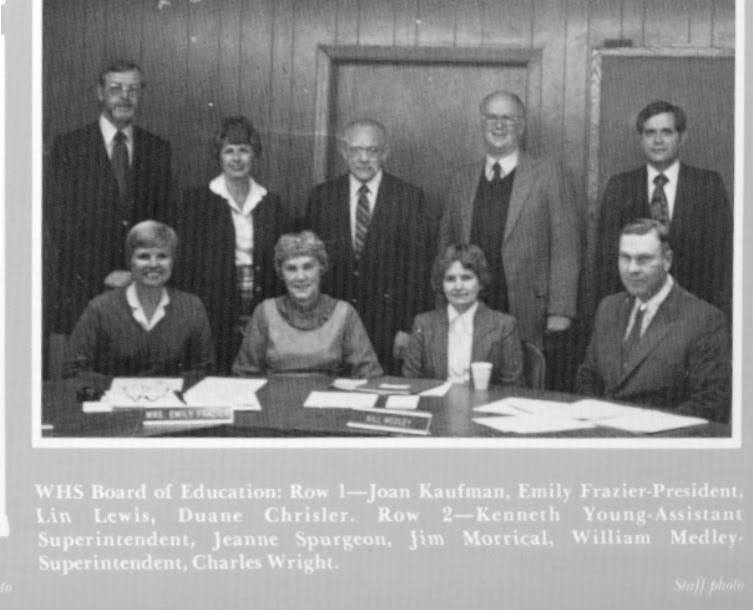
My time on the Winfield Board of Education was another rewarding experience. Experiences with other board members, administrators, teachers, and parents were great learning experiences. As board members we faced and dealt with the difficult education issues of our time. We often disagreed but nearly always came together to benefit the children attending our schools.
Quail Ridge Golf Course, my “home away from home” has been a big part of my life for the past twenty-six years. Everyone involved has been great from Mike Hammond to Brad Sexon and everyone in between. The course remains as one of the best in Kansas and will be missed.
The forty plus years have gone by quickly and we will carry great memories to the next chapter of our lives. We also want to thank anyone we inadvertently omitted. So in closing in the words of the great cowboy movie star Roy Rogers, “ Happy trails to you until we meet again.”
Wednesday, May 23, 2018
Wednesday, February 21, 2018
Overcoming Failure!
Aristotle once wrote that we never know a thing until we know it by its causes. Every failure, as well as every success, has its cause. If we understand the cause and reverse it if we can, then we overcome failure and turn it into success. We can learn from our failures and as Pro football coach Don Shula once said, “failure isn’t fatal, and success isn’t final.” What we do after the failure makes the difference.
Self-discipline is often a cause of failure as people can’t manage themselves. Looking to others as role models and following their lead can help us overcome inability to self-discipline. By viewing people who have been successful we find methods to help us move towards success. Our task then becomes to take their ideas and personalize those ideas so they fit our personality and work for us.
A related cause of failure is the issue of time control. Many lack the ability to put business first and reject nonproductive demands on their working time. Setting priorities and staying with them is a must to overcome failure. As a manager once told me “to work when you work and play when you play, but don’t mix the two.” It is important to balance the important areas of our life, so we get our priorities taken care of.
Sometimes we fail because we lack the sense of urgency to complete the task. We put off completion or look for an easier way to finish. Overcoming procrastination frees us both mentally and physically to have availability to get additional tasks completed. Completing tasks also give us a sense of accomplishment that will carry us on to the next challenge.
Lack of faith in oneself is another reason people fail. Most of us can do almost anything we want to do! The problem is deciding what we want and then going after it with all our efforts. Too often we set and dream about an outcome while others are making things happen. Instead of being spectators we need to become participants.
One final comment about overcoming failure. Everyone that has attained great victories has done so after failure, sometimes great failure. As W. Clement Stone once wrote, “Success is achieved by those that try, and keep trying.” Some of the greatest achievements in history were made after failure, often after many attempts. Abe Lincoln and Walt Disney are examples of multiple failures that became monumental successes!
Contact Chuck at: chuck.wright@sckans.edu
Monday, February 5, 2018
Finishing Well!
We spend our lives reaching for goals and trying to accomplish our personal dreams. Often we get sidetracked along the way and we settle for less than we had planned. We look for success and have to understand that as the late great speaker Earl Nightingale once stated “success is the progressive realization of a worthy ideal.” One of the key words in the definition is progressive! We can’t get it all done at once. No matter what happens along the way the key is finishing well.
It almost goes without saying that to finish well one of the keys is getting off to a good start. Starting slow or poorly means we have to make up the ground we’ve lost and play catch up with others or other organizations that did get going well. We need to decide what we really want to do and then plan the steps necessary to get what sports calls “momentum.” There are times when there are “great comebacks” but most of the time starting well precedes finishing well!
Next, as Stephen Covey wrote, we not only “Begin with the end in mind’’ but keep the end in mind! Distractions and roadblocks will come along as we progress toward the goal so we must make adjustments that will get us on track during the journey. Seldom, if ever does a plan work exactly the way we envisioned it to work so we need to be flexible and adjust our plan to keep it moving. Often in sports two halves of a game look completely different because one team makes the adjustments to finish well and win the game.
Another important aspect of finishing well is staying the course. Losing focus and ultimately being distracted loses time and makes our chosen end more difficult. Even when there are times we can only make small amounts of progress it is important to stay on course. Procrastination can cause our getting off course for a while and can sabotage the whole plan. The Nike motto “Just do it.” is important and can help in staying the course.
When we finish well and achieve the goal we will have the opportunity to “enjoy the fruits.” The first fruit is that of accomplishment, the satisfaction of success. Other fruits depend upon the goal but could be income, more family time, a better retirement, a nicer home, an almost limitless list of possibilities that come from “finishing well.”
Saturday, June 3, 2017
The Importance of Growth!!
Throughout our lives one of the most important aspects is that of growth. When a child is born we record weight and length and then measure standards of whether proper growth is occurring. We make sure proper rules of nourishment are followed as well as activities meant to gain proper levels of strength. Some of us even grow to levels exceeding standards when rules of growth are broken and exceeded. Such is the story of physical growth in our society.
We also have a need for internal growth. The problem with internal growth is that it isn’t as easily observable. We can think growth is happening or not happening and be wrong. Some level could be going on but is it enough or in the desired direction? We need to understand three factors of growth in ourselves and others.
First, growth is necessary. Just as we grow physically we must also grow internally (both emotionally and intellectually). No matter where we are we must work at growth. I remember hearing once that a person could have “twenty years of experience” or “one year of experience twenty times.” It all depends upon how we take our experiences and learn from them. Whether successes or failures we can learn and grow or be in the same place over and over. One thing for sure we can’t stand still.
The second important factor is that growth is not automatic. Two people go to work in a similar job for the same company and in ten years there is a vast difference in their level of performance. Sometimes ability is the answer but more often deciding for growth opportunities is the separation. John Maxwell put it well recently in one of his one minute broadcasts, “Some people go through life, while others grow through life.” Some people wander through life taking life as it comes others grow and make things happen.
A wise man once told me there are three types of people. One type watches what happens, the second type makes things happen, and the third type wonders what happened. The middle group knows that growth is not automatic and they set out to grow and by doing so they make things happen in their lives.
The final factor, hinted at by the first two, is that growth must be continuous. One we reach a level it is time to move to the next level. We don’t live in a static society, it is very dynamic. If we don’t grow we will be left behind and perhaps replaced by someone who does. The Japanese have a concept in their society that is important to visit. The concept is kaizen, or small continuous improvement. Their goal is improvement every day.
As Americans we are in a microwave culture. We want it and we want it now! Sometimes we aren’t willing to pay the price. We want large, fast growth rather than steady growth which more often can be maintained. We need to remember that growth is necessary, it is not automatic and it must be continuous.
Thursday, December 22, 2016
2017: A Year of Challenges!
2017 is fast approaching and will soon be upon us. The year will certainly have challenges. Just as the early part of the century tried us, so will this year. The century was off to a bad start with the Y2K scare and the horrific events of September 11, 2001. As time went on we had close, divisive elections and one of the greatest economic downturns in our country’s history. Now again we are faced with a divisive election and the global threat of terrorism. Despite all of the negatives many have managed to both survive and thrive. What are some things we can do to have a better chance of succeeding in 2017 and beyond?
One of the great lessons of the first seventeen years of the century is to expect the unexpected. Whether in the business world or our personal life things just don’t always go the way we thought they would. The unexpected could be a fire, a storm, a prolonged illness, or even an unexpected windfall, but as we have seen in the past, the unexpected will happen. Certainly our recent election produced the unexpected! History tells us we will see many more this year.
Once we have had the unexpected happen we need to “roll with the punches” or as Charlie Rich sang “so on and on I go, I keep on rolling with the flow.” If we can change and redirect the unexpected we must do so, if not we have to adapt to the change and continue moving forward. If we are stiff and resist changing times we delay our movement towards solving our problems. As a nation we need to pull together and move in the same direction for the good of all concerned.
Preparation is another key to success as we move into 2017. We must keep preparing for the direction our efforts will take us and also prepare for those “unexpecteds” as they happen. We don’t need two plans, but rather we need plans coming from our preparation efforts that must be both specific enough to lead us and flexible enough to move in the direction or directions change takes us. If we can anticipate some of the issues that we might face we can escape being reactionary and thus save a lot of time in the process.
Preparation gets us ready to face events and working the plan or following through puts us in position to gain outcomes. Once the plan is worked and outcomes are achieved we can fine tune the plan so that the goals of the plan can be met. If there is a shortfall adjustments need to be made and we once again need to “keep on rolling with the flow.” Seldom does a plan work out exactly the way it was formed.
One final thought for achieving success in 2017 is to have patience as the year unfolds. Events and happenings in our life can get us too optimistic or too pessimistic about results. New leadership will hopefully provide direction that will solve problems. Things can start bad or good and can go the opposite as the year unfolds. If we apply the thoughts we have discussed and give them time to work we have our best chance of positive results and a successful 2017, individually, collectively, and as a nation.
Saturday, October 29, 2016
"Wearing Out or Rusting Out?"
“Grow old along with me!
The best is yet to be,
The last of life, for which the first was made:
Our times are in His hand
Who saith "A whole I planned,
Youth shows but half; trust God: see all, nor be afraid!'' Robert Browning “Rabbi Ben Ezra”
These opening lines from Browning’s poem remind us that all of life is important, not just the first part. Someone once told me “I’d rather wear out than rust out.” Life is in the doing. He was so right! We can continue to do something with our lives or we can just set around, rust, and become old in every way. Too often in our society we settle for a very passive lifestyle in front of the television. Health issues come or worsen, the rust out process begins.
As we grow older we can’t do everything we once could. We can however do some things better as a result of experiences along the way. We can help others benefit from the knowledge gained and stored for use another day. In that way our ideas pass on to a new generation. Our opportunity to wear out rather than rust out is enhanced by following a number of rules.
First, growing older doesn’t change the person you are inside. The battles of life have made you smarter and tougher. The old axiom “work smarter, not harder” comes into play here. The energy level may be lower, but the tasks take less time as a result of being able to anticipate problems and having the ability to finish them in a timely manner. Focusing on the task at hand can allow us great results in far less time.
Next, growing older does not keep us from being able to enjoy life and its challenges. In his book “Man’s Search for Meaning” Viktor Frankl wrote of the importance of purpose in life. As we age we need to focus on what we want to accomplish with the balance of our years. This may be work-related, new interests, or just taking time to enjoy the simple things in life. Several years ago my wife, Sharon, and I spent several days searching out and taking pictures of the stone bridges in Cowley County. What a great time we had!
Finally, these “golden years” are best spent and shared with someone or several someones. Sharing our dreams and living them with others leaves a legacy that lasts well into the future. For about ten years Sharon and I had the privilege of sharing trips to various locations with our four youngest grandchildren. Eventually jobs, boyfriends and girlfriends, and other activities ended the “Grandkid trips”, but Sharon and I have continued the adventure of travelling. I would much rather finally “wear out than rust out.”
Wednesday, September 21, 2016
"Keep On Keeping On"
Sometimes we are our own worst enemies when it comes to trying to accomplish tasks. Often we get enthused, start, and when the task becomes too hard, we move off to something else. Focus is lost and the task delayed or forgotten. A wise man once told me to succeed in sales I needed to “keep on keeping on.” His obvious success made me heed his advice.
At first glance “keep on keeping on” seems simple, but it can be a daunting task. Often Murphy’s Law “if it can go wrong it will” gets in the way and discourages us. We have to learn to discipline ourselves to stay on task. Anything less wastes time and dooms us to failure. We have to be mentally tough and stay on task.
One attitude that hinders our progress is the “go along to get along” position many take. We get upset when our children yield to “peer pressure” and yet we fall victim to the same position. Others get discouraged or “They decide to go a different direction and so we follow their lead and get derailed. It is much more difficult to get back on track than to just keep things going in the first place.
Early in my insurance career I read a book by insurance millionaire The W. Clement Stone, “The Success System That Never Fails” where Mr. Stone stated “Success is achieved by those who try and keep trying.” Whenever I’m inclined to quit or just delay a task I’m reminded of words of wisdom and “keep on keeping on. Maybe Norman Albright said it in best way when we were at coffee one day and he said “No one has endurance like the man that sells insurance.” That statement about endurance is true of anyone wanting success.
When the task seems difficult we also end up procrastinating. Putting things off will serve to allow the task to become bigger and increases the procrastinating. A better way to handle large tasks is to break them into smaller tasks and move the job towards completion. I remember hearing “by the yard it’s hard: by the inch it’s a cinch.” It is certainly easier to handle smaller tasks that yield momentum.
In reality if we learn the lesson of “keeping on keeping on” we will set ourselves apart from the most of those around us. Earl Nightingale, the great motivational speaker of yesteryear, estimated that only 5% of the total population would continuously do the activities necessary for success. That puts them in exclusive company. Determining to “keep on keeping on” is a great starting place.
Friday, May 20, 2016
"It Might Have Been!"
The great American poet of the mid 1850’s, John Greenleaf Whittier, penned some thought-provoking words when he wrote “the saddest word of tongue or pen are these words: it might have been.” Surely these words have haunted all of us at one time or another. Why do we end up in the “might have been’s” and how do we overcome and gain success?
One of the attitudes hindering accomplishment is our feelings of inadequacy. We simply don’t see ourselves being able to do what we need to. My Grandpa told me “he who hesitates is lost.” Lack of confidence keeps us from starting, or we start and stop and never get going again. In his book “Success Through a Positive Mental Attitude” W. Clement Stone wrote “Success is achieved by those who try and keep trying! We’ll never know until we try!
Closely related to feelings of inadequacy is just the simple fear of failure. Our ego often can’t stand the thought of failing! What will others think of us? How will I recover? Reality is that anyone ever accomplishing anything of note failed-often many times. Disney did, so did Lincoln, so must we! It really isn’t how manty times we fall, but how many times we get back up and keep trying. Babe Ruth struck out over 2000 times, but we remember him for his 714 home runs in the dead ball era!
We often get resistance to what we want to accomplish. Accepting “no’ can stop us from reaching our goals. We then stop asking and we drop into that “might have been” mentality. Instead we should regroup and continue to ask. The first step in getting to yes is asking and then adjusting until we finally get to yes! My original Prudential Manager Paul Hutsey used to say each no received is the key in getting to the next yes and the yes is what makes a difference. Accepting no forever put us in “it might have been!”
No matter which of the attitudes hinder us the result is the same: it might have been! It might have been! It might have been! Having to say those words about something truly important is worse than failure! Teddy Roosevelt, our 26th President said on several occasions “Far greater it is to have won great victories though checkered with defeats than to take company with that great host knowing neither victory nor defeat!” Teddy was right, so too was Whittier, and Stone! Let’s stay away from having to say or think, “it might have been.”
Contact Chuck at: chuck.wright@sckans.edu
Thursday, March 3, 2016
The Power of "No"
According to Merriam-Webster Dictionary the definition of the word “no” is“ used as a function word to express the negative of an alternative choice or possibility.” Rather a simple definition of one of the smallest, and yet, one of the most powerful words in our English language. We use and misuse this word on a regular basis so we’ll take this time to visit about “the power of no."
Several years ago when I was in Wichita one of my agents came forward with a request I knew couldn’t be complied with so I told him no. In the next few weeks he would alter the request slightly and come back repeatedly. After several encounters I replied “what part of no don’t you understand?” Years later when Lorrie Morgan recorded the song “What Part of No “ I felt I might have missed a great opportunity! Truth is my agent understood “no” he just didn’t want to accept that answer.
One of the real powers of the word no is to know when to use it and then sticking by the decision. Parenting is one of the places where misuse of the word occurs regularly. We can vary from saying no too often to saying no and having our children work their way to yes by playing their parents against each other. At other times children just use the method of keeping at it until they get their way.
When we moved to Winfield in 1976 I had a brand new experience. I had never been involved in a community before and soon found myself member of many civic organizations. All were good, but ultimately I had to learn to limit myself by invoking the power of no. The process took some time but eventually I could balance work, family, church, and community involvement. No had become my friend.
In sales one of the biggest obstacles to overcome is the fear of rejection. Trainers try to remove or reduce this fear by convincing sales people the customer is not rejecting them, but they are rejecting the product. However, the sting of “no” would still remain.
My mentor Paul Hutsey had the most convincing take on dealing with no. He regularly would remind us that with every no we were closer to the next yes. So then we could handle the noes while working toward the yeses that would spell success. That idea fit well with his basic concept that to be successful in sales we had to be willing to fail (take no) 90% of the time. The worst thing that could happen is not to ask because then nothing will happen. When you ask the door of possibility opens for the next yes!
Tuesday, December 15, 2015
The Test of Time
The month of December brings a lot of thought about time. We set resolutions that usually don’t make it through January. We think about getting things accomplished before the end of the year. We also set strategies about having a fast start and a good 2016. The thought for me ending this year has been “the test of time.”
Over the years I’ve seen a lot of fast starts and few, whether in business, church, or school that stand ”the test of time.” Many start with best of intentions but for whatever reason don’t follow through and complete what they start. For every Miguel Cabrera there are many, many baseball players who only have a one or two, or at best a few good years. For every Peyton Manning there are many quarterbacks that have short careers. The same is true in our day to day lives.
In the months surrounding the start of my insurance career half a dozen young agents were hired. We all took the same training from the same trainers but achieved far differing results. Most of them were more productive that I was in those early days. However, one- by-one they went on to other pursuits and eventually I was the only person of the group to end up with a long insurance career.
So then, the question becomes what are the attributes that yield results that stand “the test of time?” These attribute would be true whatever the area of endeavor. Certainly an important attribute would be that of focus. Knowing what we want to do. My manager Paul Hutsey often said that making the decision what we want was often more difficult than accomplishing the task.
My former partner Russ Larsen used to talk about the importance of “staying hitched” or staying with what we start. Life offers so many opportunities and some other venture often looks better (the grass always looks better on the other side of the fence). So the need is to re-focus and stay on the track. Success in any venture is accomplished by those who try and keep trying!
When we have focused and determined to stay with the course it becomes important to have a long term vision of where we want to go with our life or career choice. Often when things don’t go our way right away we lose our focus. So much of the time short term failure causes many to change their course. We avoid this by continuing growth towards our goals. Training, continuing education, and experiences move us towards greater proficiency and sustainability. Those who stand “the test of time” keep their eyes on the prize!
Thursday, November 26, 2015
The Season of Thanks
As always happens the year is quickly winding down. The last weeks of a year are some of my favorite days. First we come to the most American of holidays--Thanksgiving. In the 21st century we aren’t a very thankful people. Our massive expectations get in the way o true thankfulness. We have become more and more demanding of everyone, including our government. Our attitude is one of entitlement rather than gratitude.
This Thanksgiving season will be a special one at our house. On the day before Thanksgiving, 1965 my wife and I were married. We’ll celebrate 50 years together just a couple of days before our 51st Thanksgiving. The years have gone fast, too fast, but life has been good. We have enjoyed good health, a great family, and meaningful work. It just doesn’t get much better.
We should thank God for life itself. As the old hymn says “Praise God from whom all blessings flow.” The New Testament writer James wrote, “Every good gift and every perfect gift comes down from the Father of lights…” My other holiday favorite is Christmas. Not the commercial event but the birth of the Savior of man. Christmas is actually the greatest day we should show our thanks.
Our next thanks should be to the troops around the world who are defending our way of life. They have sacrificed greatly in time, injury, and even loss of life. Included would be the police and firemen that daily protect us. They will be of even more importance as we face the continuing challenge of terrorism. Theirs is a tough and thankless job so we should encourage them whenever possible. I can’t imagine what life would be like without their efforts.
Our friends and families should also be thanked. Without their love and support, life would be very lonely and much less joyful. It has been said that a friend is someone who knows all about you and still remains a friend. Life doesn’t bring a lot of friends so we should treasure and thank them often. We also often take our families for granted and don’t show them the appreciation they deserve.
We could go on to several other things to be thankful for, but I’ll finish with just one more. We should be very thankful to be an American. We have freedom and privilege like no other people have ever had. We can freely choose our occupation, our home location, and those we associate with. Many don’t have this freedom. We take these all for granted. Another sign of our ingratitude.
So as we enjoy these events of the last weeks of 2015 with family and friends let’s take a moment to say thanks. And if we do develop a spirit of thanksgiving (and a true Christmas spirit) we can carry it with us all year.
Wednesday, August 26, 2015
Avoiding Micromanaging!
One of the current buzz words of management is micromanaging. In business micromanagement is a management style whereby a manager closely observes or controls the work of subordinates or employees. Often the employee feels smothered and inadequate to the task. Micromanaging can stifle productivity and creativity. Often the message of lack of confidence that is communicated causes absenteeism and ultimately turnover, both are extremely expensive. At the other end of the spectrum is allowing the employee to feel abandoned and without support. Neither is a healthy situation.
Overcoming the tendency to micromanage has no quick fix. Improving the quality of recruiting is a first step. Whether bringing in new employees at the entry level or choosing from among promotion candidates, leadership must be diligent in the recruitment process. Often due to the press of time decisions are made without proper care. When openings are high in quantity or duration panic sets in, poor hiring or promotion practices are employed. Disaster is the result and micromanaging abounds.
When we have selected recruits for our openings, proper training and education must follow. We must aid them in developing skills required for their position and at the same time communicate their role in the organization. Someone has said proper preparation prevents poor performance. When we give them what they need to perform, we won’t feel the need to constantly look over their shoulder. When they know what is expected of them and have the tools to perform, they can build higher confidence in their ability.
The final key in avoiding micromanaging is the building of trust. When the leader has trust we or she only steps in when asked or when it is apparent that the employee is on a course to disaster. We build trust by giving small assignments and building their confidence in getting things done and our confidence in them. The difficulty level of tasks then increases as successes are attained. Skills are added as level of the task is increased.
The trust stage is best accomplished with a high level of communication. As questions arise mentoring skills should be used. The trust we build towards them must also be built in them towards us. In this way the dialogue will allow them a comfort level to ask questions. As the questions come we share our experience and allow them to work their own method in accomplishing the task. Open communications allows the employee to get the information and feedback they need without feeling overwhelmed. The end result is a high level of trust flowing both ways.
Monday, July 6, 2015
Smelling the Coffee!
Over the years I’ve had several advise me to “Stop and smell the coffee!” When I was younger I thought there would always be another moment. Age helps us realize our time is limited and so are our opportunities. In our fast-paced world we often don’t take the time or make the time to enjoy life as it happens. I have found this to be true in at least three areas of life.
First, as we accomplish success at work we forge on to the next project or goal. Before we’ve had time to savor the moment we’re in the middle of a different task. We’re so intent on making things happen that we don’t really get to kick back and enjoy the moment. Later we look back and wish we could have paused and realized what was now past.
The second area we often rush by is those personal goals or our personal “bucket list” of items we plan on doing someday. In 2005 Sharon and I started our annual “Grandkid trips” when we took our four youngest to Orlando. In the hustle and bustle of making sure things were perfect and that we covered all the activities were completed we didn’t “smell the coffee” of that moment in time. This year we had to cancel the trip due to a health issue and realized how big a part the trips had played for ten years.
The third and most important area is that of personal relationships. When someone passes we often have regrets of the time we could have spent and didn’t. Our mothers are 87 and 91. We’ve had opportunity to enjoy the time with them. On the other hand our Dads were 62 and 65 when they passed. How we would have enjoyed more time, but did enjoy what time we had! Several friends have passed this year and I look back and am glad for the moments we had. When I think of them I smile and remember the good times.
In June my sister and a cousin in Wichita both had accidents where vehicles were totaled but injuries weren’t life threatening. I saw a picture of my niece’s car and was thankful for the results. It could have been worse, a lot worse. Once again the importance of “smelling the coffee” became obvious. We never know when an encounter will be our last.
Having a health issue brought future limitations into my mind for the first time. I’ve been blessed with 71 years of good health. My goal is to slow down and enjoy each moment, person, and event to the fullest. We are only here for a very short moment in time. Hopefully we can all learn the lesson of “Smelling the coffee!”
Monday, May 11, 2015
Commencement Revisited!!!
May has rolled around once more. Thoughts of Summer and all the activities abound. Before we are off on the adventures that lay ahead we should pause and think of one of our major traditions- commencement.
One of the rites of passage in Spring or really early Summer are commencement ceremonies. We have them for high school, college, grad school, and probably others I’m not even aware of. The word itself intrigued me because when I graduated I thought that was the end and yet one of the dictionary definitions of commencement is, “a beginning or start.”
After more thought I realized the title was a proper one no matter what the level of achievement. Graduation requirements represent the fulfillment of a set of requirements, while the services signal the start toward the next stage of life, the next set of learning activities. Everyone is required to commence or to ultimately stagnate at some level of attainment!
The high school grad has several potential avenues of commencement. They can go into the work world, go to trade school, or continue on to the collegiate level. Each has its own opportunities and possibilities. One is not better than another, just different. Trade schools offer great possibilities since skilled craftsmen are a much needed quantity in our society. Work offers income and a place to grow while deciding the course for “the rest of a life.” College is most beneficial for the person focused on what they want to pursue as a career.
The baccalaureate graduate also has some hard choices. The decision to enter the work world might be impeded by a scarce present supply of jobs in his or her chosen field. Grad school is another choice. I’ve often told my MBA candidates they differentiate themselves by spending that one more year on campus. Only about one third as many have an advanced degree as those with an undergraduate degree.
When the graduate students have their ceremony it can be a scary finality to it and yet it still a commencement. They must now enter the “real world” and put all those years of formal learning to work in a practical way. They must also learn that real learning has not ended but is just beginning. Their ability to apply their knowledge will determine long term success in their chosen field.
Even those of us who have long since stopped learning in a formal environment must always be open to changes and new ideas. I remember in 1986 when I bought my first computer, I thought it would be my last. Ten machines and many other devices later new knowledge and learning continue. As we get the chance to celebrate the commencements this year let’s remember we have only begun life.
Thursday, March 26, 2015
Remembering Bill!
It’s not difficult for me to remember the first time I met Bill Medley. It was the Spring of 1981 and I had just been elected to the USD 465 Board of Education. Jim Reed called and said I was to participate in interviewing candidates for Superintendent. At the district office and later at a local restaurant I met and had my first conversation with Bill and Maxine Medley. We had several good candidates and the decision came down to as Joan Kaufman put it, “When you have a close decision you go with the known quantity.” What a great nine years I had working with Bill, first as colleagues, the he became a mentor, and finally a valued friend.
The next paragraph is an excerpt from one of my earlier columns:
Bill Medley was a high school principal and superintendent in USD 465 for nearly 30 years. Bill became USD 465’s Superintendent the same day I became a new board member in 1981. Several lessons were learned during his tenure, but I will focus on two that I clearly recall. Bill’s goal was to always find them “doing something good.” He included students, teachers, staff, administration, and any other employee. The other lesson was his ability to start the seed of an idea, throw it out to an audience, and watch it come back in developed form. Bill was an example of Emerson’s old quote, “there is no limit to what can be accomplished if it doesn’t matter who gets the credit.” Bill was a master at giving credit and conversely, taking the blame.
It is also not difficult to remember my last two conversations with Bill. I was working in my yard last Fall and he stopped and we visited. He told me how his son Forrest made copies of one of my writings about him and handed them out to employees. We made a plan for me to have coffee with him the next week. At out meeting we reminisced about some of the accomplishments of our time together. Each idea that worked he recalled how I had developed it with him at a board meeting or a trip to Topeka. My recollection was that mostly they were Bill’s ideas that the board and administrators helped develop. That was Bill.
At his celebration service Brilla Scott mentioned his many of his accomplishments and ended saying she thought his proudest was returning to the community he loved as superintendent. I would agree with that and further say that being on the board that brought him back is also one of my proudest moments also. Our thoughts and prayers are with Maxine, Forrest, Jennifer, and the rest of the family. He will be missed!
Friday, February 27, 2015
The Pursuit of Money
Throughout history and in every society there has been an enduring question about the importance of money. In reality the place of money and the priority of accumulating “things” is an issue that each of us must settle for ourselves.
The apostle Paul gave advice to his young protégé Timothy “For the love of money is the root of all evil” (I Timothy 6:10). So then it is the LOVE of the money not the money itself that is the root of all evil. Like so many things in life it is when we are out of balance about money and seeking for it that we get into trouble.
The love of money has manifested itself in many ways. Wars have been fought, people have been murdered, people have been cheated all for money and often for paltry sums. In another context families have been torn apart when inordinate of time has been spent by a parent or parents grubbing for the almighty dollar. The prsuit of money in an unbalanced way has many potentially negative outcomes.
I remember in the late Steven Covey’ great book “The Seven Habits of Highly Effective People” the comment that “no man when he comes to the end of his life regrets not spending more time at the office.” Work and money are important in this life but the really important things in life- love, family, good health.- cannot be bought. So then what is the purpose of money in our lives?
According to best-selling author John Maxwell money has only two purposes, it gives us options and it allows us the resources to help others. We have the options of where we live, the home we purchase, how we educate ourselves and our children, and even the social groups we develop relationships with. Money cannot buy us happiness, but wise gathering and use of money can allow us to live the life we choose to live. Many don’t and will never have those choices.
The second purpose, having the ability to help others, is really the essence of what life is or at least should be about. A student of mine once completed a class project surveying seventeen religions. She was trying to find what ethical positions they had in common. The dominant principle she found was several variations of the Golden Rule, to do unto others as we would have them do unto us. Having resources allows us to help those less fortunate than us.
My church has a program of supporting our missionaries worldwide. The program takes large amounts of money. Another program, Manna Worldwide helps feed and clothe children in several countries. There are many, many good programs for us to fulfill that second purpose, helping others. It is up to each of us to discover where we want to place our support.
Saturday, January 31, 2015
Common or Committed?
I do not choose to be a common man.
It is my right to be uncommon … if I can.
Those words were penned by Thomas Paine in 1776 and are true today. They reveal one of the truths about us rising above the mundane and committing our lives- it is a choice! We make those choices throughout our business or personal lives. We can follow the crowd and take the easy way or dare to try excellence as our goal. In the end it is up to each of us to choose to be common or committed!
Another truth about leaving the common and being committed is the place of failure in our lives. I know of no great success achieved without some if not great failure along the path, Disney failed as did President Lincoln. Richard Nixon lost the presidency, went home and lost the California Governor’s race, and later was elected in one of the greatest landslide elections in our history as a country. Ronald Reagan became president on his third attempt. As W. Clement Stone once wrote “Success is achieved by those who try and keep trying (being committed).
Fear of failure might be the single greatest reason well fall short of what we might become and thus never really commit to any task, goal or life pursuit. Teddy Roosevelt had it right when he wrote “Far better is it to dare mighty things, to win glorious triumphs, even though checked by failure...than to rank with those poor spirits who neither enjoy much nor suffer much, because they live in a gray twilight that knows not victory nor defeat.” We must step out of our comfort zone if we are ever truly going to be committed.
The first two years of my insurance career were tarnished by spotty production and a willingness to go along with the crowd. Given great training I had a desire to excel but a commitment to the easy path. During a twenty-five week business insurance class I learned much and saw examples of people choosing to be committed and the lessons changed my path forever.
At the end of his great poem “The Road Not Taken” Robert Frost wrote “I took the one less traveled by, and that has made all the difference.” That is the third truth about leaving the common and moving to the committed. The road will not be crowded. Others will try and divert us and get us to travel the easy path. Obstacles and diversions will try and sidetrack us as we travel life’s journey. We must forge ahead to reach being the uncommon and to remain committed to our future!
Monday, December 1, 2014
Getting Things Done!!
Much has been written about how to get things done through people. There are several theories of motivation, each having an element of truth and success. After studying and trying most of them for over forty years I have come to the conclusion I can’t motivate anyone, but can just put someone in a position to motivate themselves and reach for what they want.
Why have I come to that conclusion? I have read books and listened to speakers on motivation for years. After a few days their benefits have waned unless I made a conscious effort to keep the effect going. Most people are not willing to make the effort to keep up the effect, so as leaders we must find a way to do it for them. My system for putting followers in a position for self- motivation comes in three steps. They are, as follows:
First, it is important to create an atmosphere. We want them to be in a positive position for accomplishment. We must get to know our people and what THEY want from our organization or team. When we know them we also must prepare them with training needed to accomplish their tasks. Someone has said “nothing succeeds like success” so we must allow them small victories, and yes even some failures, to move toward their own goals for growth. Along the way we involve the team in goal setting so it becomes OUR plan and not just something that we are handed without input.
When we have successfully created the desired atmosphere we then must move on to the second step, contributing to our success. We do this first by understanding that we too must grow and continue getting better at what we do. We lead by example and in so doing contribute to our and their success. This step is a continuous process because each person needs something different from us and as they grow what they need changes. A key to contributing to our success is remaining flexible to the ever changing needs of our staff or team. One of my former managers once said “never ask someone to do what you haven’t or wouldn’t do”. We contribute to our success by getting “in the trenches” with them!
The final step is to always celebrate our victories. These celebrations come on at least two levels. As we are progressing towards a goal we must have small celebrations that recognize our progress and those responsible for the achievement. When the big picture goal is reached we should also celebrate, but on a larger scale. Each step along the way should be marked with meaningful recognition for all involved. We want to give credit where it is due and to make it vocal and valuable. By doing these things we make it not my victory, but our victory and we are “getting things done!”
Contact Chuck at: chuck.wright@sckans.edu
Saturday, November 8, 2014
Saying Thanks!
November has rolled around again, the year is winding down, and many of our thoughts turn to those things and those for whom we are thankful. Really this should be a year around activity but it seems we get too busy to stop and be thankful and to say thanks. In this land of plenty it is easy to develop and attitude of entitlement and not realize how blessed we are. My list is certainly not all-inclusive and I’ll think of something left out, but I’ll share some of the items that deserve my saying thanks.
Thanks to God for being born in this great nation. I am free to worship how I want, work where I want, and live where I want. Those and other freedoms are only possible because of those sacrificing, even dying, so that I and others could exercise our freedoms. Changing our government by ballot and not by bullet is another wonderful freedom. We’re even free to call others stupid and uneducated because they choose to vote differently than we do.
Thanks to my wife of forty-nine years and all the joys and sorrows we’ve shared. I decided long ago that she was a keeper and one of the few people (maybe the only one) that could put up with me. In those early days I thought she was the nicest and the smartest person I ever met. I was right. I’m hoping for many years to share our common interests- our faith, our family, and our friends.
Thanks for our families, close and distant. Our daughters, grandchildren, mothers, sisters, cousins, etc. have added joy to our household. We have shared many special occasions, joys, and sorrows. We have had great opportunity to share with you in our home and in distant places. As Debbie Boone once sang, “You light up my life.”
Thanks to those sacrificing to keep us safe. Our police, firefighters, and yes, our military serving on foreign shores all deserve our thanks. Our lives happen so peacefully and matter of fact that we too often forget the risks you take to provide our everyday lives. An ordered society is dependent upon each of you to keep us from chaos.
Thanks for the opportunity to have two great careers. The sales and sale management career of my youth and the teaching career I’ve had in my mature years. Both have been a blessing and added to my life. I continually learn from the students taking my classes.
These are just a few things I have to say thanks about. Think of yours and remember to say thanks for those providing them. Also, have a great Thanksgiving!!!!
Wednesday, September 17, 2014
Laugh, Cry, Pray!
Recently I was visiting my Mother at Cumbernauld Village. As I was leaving I ran into George Lowe. His mother had recently moved into the facility. We were lamenting the direction of our mothers’ health. As our conversation ended George remarked that when dealing with these kinds of issues he tried to laugh, cry, and pray. The more I thought about it the advice was not only good for where we were with our mothers, but just about everything that happens in life.
Doctors have long held that laughter is good for us. Readers Digest has a section called “Laughter is the Best Medicine” and wise King Solomon wrote “a cheerful heart is good medicine” in Proverbs 17:22. Laughing is often contagious. People seeing others laugh get involved despite often not knowing the topic at hand. At the end of a good laugh everyone feels better.
My prior district manager once told me that while we are involved in many serious activities it is important not to take ourselves too seriously. Sometimes the most laughable situations are those we get into because we “do dumb.” We can either let these times get us down or have a good laugh and move on. I’ve had several laughs at myself over the years.
The ability to cry is also very important. For much of my life the conventional wisdom has been that real men don’t cry. When our girls were young we would watch a television show with a sad ending. The girls and their mother would have tears running down their faces. To me it was just a story. My wife often said she hated to see what would make me cry. That time came in August, 1989 when my dad passed from this life.
Crying is also a good release of the emotions and seems to clear our sensory system. We cry not only for loss or bereavement but also for joy or in appreciation. Often when we are surprised in a positive way many respond with tears. We get involved with someone crying and tears of compassion flow.
I remember several years go seeing a sign “Prayer Changes Things.” My experience over the years validates that message. Prayer is as much an attitude as a specific event. It is the recognition that a power larger than us controls all the events of life. We can pray selfishly but are more effective when our petitions are in behalf of others with needs.
What is the power of prayer? James, the writer of the New Testament book wrote “the effectual fervent prayer of a righteous man availeth much.” In other words the power of prayer is enormous. I know that my Grandmother’s prayers were often and powerful on my behalf. Thanks George I’m glad we had our brief conversation. When the stresses or joys of life come, as they certainly will, I plan to laugh, cry, and pray!
Subscribe to:
Posts (Atom)